
What makes walling worth doing properly
Useful structure, not just division
Walls can hold levels, form raised areas and define space as well as mark a boundary.
Drainage considered where needed
Retaining work is planned with water pressure in mind, not just the face you can see.
Neat joins with surrounding features
Piers, corners and links to fences or steps help the wall feel intentional.
Walls that do a proper job in the garden
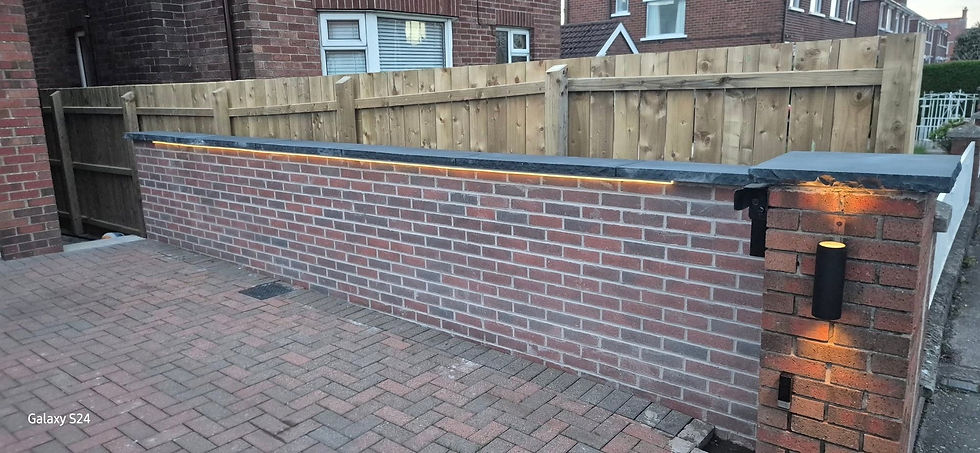
A garden wall can do far more than mark an edge. It might hold a level change, form a raised bed, divide one part of the garden from another or give a boundary more permanence than fencing alone. What matters is building it for the job it has to do. Height, ground conditions, exposure and any load from retained soil all affect the foundation and the detail above it. We also look at how the wall will meet paving, gates, fences or steps, because awkward joins are often what make a finished project feel untidy. With RL Paving & Construction, the structure and the appearance are considered together from the start.

Foundations, drainage and finishing details
If a wall is holding back soil or dealing with a change in level, drainage behind it is a practical necessity, not a nice extra. Water pressure can cause trouble slowly and then all at once, so the below-ground thinking matters. Material choice is important too. The brick, block or facing finish needs to suit the property and nearby hard landscaping, while copings, corners, piers and returns all influence how complete the result looks. Choosing RL Paving & Construction means those details are dealt with as part of the build, so the wall feels properly integrated instead of like a last-minute divider.
Frequently asked questions
When is a garden wall better than fencing?
That depends on what you need from the boundary or feature. A wall can give more permanence, cope better with some level changes and support raised sections more effectively than fencing. If the main need is screening alone, fencing may still be the better choice, but many sites benefit from using both together.
Do retaining or raised walls need drainage behind them?
Yes, if the wall is holding back soil or dealing with a change in level, drainage needs to be considered as part of the construction. Without it, water can build pressure behind the wall over time. It is one of those details you hardly see when it is done right, but you notice when it is ignored.
Can a new wall tie into steps, gates or paving?
Yes, and it is often best to plan those links from the outset. The height, width and finish of the wall need to relate to adjoining steps, gate openings or paved areas, otherwise the joins can feel clumsy and force later compromise in the layout.