
What makes the finished layout easier to use
Routes that protect the lawn
Paths can carry everyday foot traffic so the grass does not become the default walkway.
Prepared ground for fresh turf
Levelling and soil work help a new lawn settle more evenly and look better.
Landscaping with a clear plan
Seating space, access and open lawn areas are laid out to work together.
Helping the garden feel connected
Some gardens in Newtownabbey are not short of space, just short of connection. The lawn does not relate to the seating area, the route to the gate wears through the grass, or the whole layout feels broken into bits that never quite meet. We use garden landscaping to sort those relationships before the final surfaces go down, balancing paved routes, lawn space and the practical shape of the site. Turfing can then give you a fresh natural lawn on properly prepared ground, while paths create stable links between the parts you use most. With RL Paving & Construction, the aim is a garden that feels easier to move through and simpler to keep tidy.

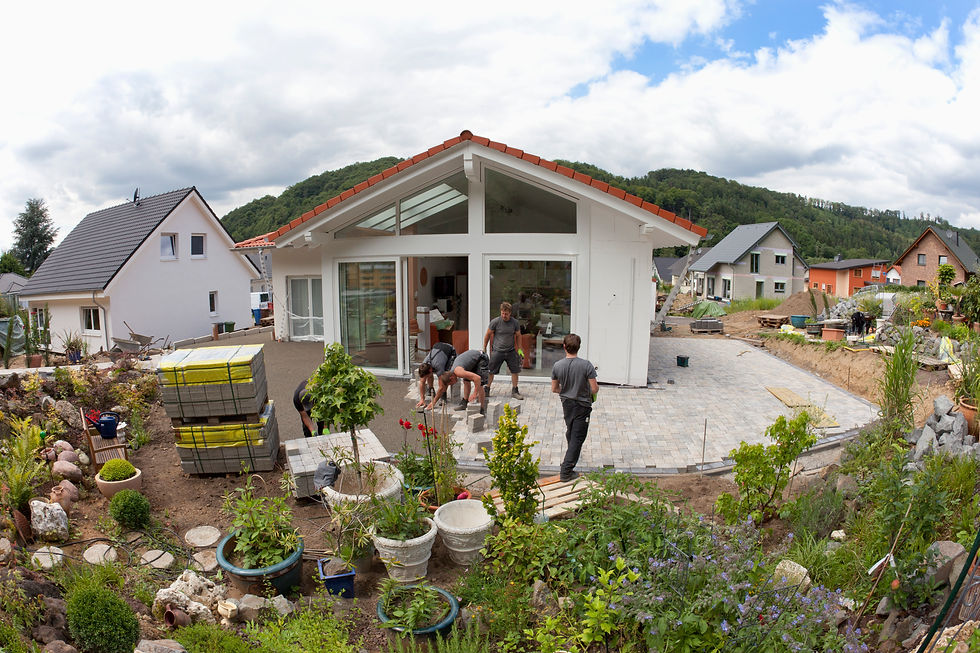
Levels, drainage and working access first
For projects in Newtownabbey, we start by looking at the parts that affect everything else. That means ground levels, any wet areas, the route for materials and where work needs to begin so the layout comes together in the right order. Choosing RL Paving & Construction means the paths, lawn and broader landscaping plan can be coordinated instead of fitted around each other later. That helps avoid narrow awkward routes, soggy edges beside the lawn and the feeling that each improvement belongs to a different garden.
Frequently asked questions
Can a new lawn and path be planned as one job?
Yes, and that is often the best approach. The path levels and route affect the lawn edges, while drainage and soil preparation influence how well the turf settles. Planning them together gives a cleaner and more practical finished layout.
What if the garden is uneven or underused?
That is exactly the sort of issue landscaping is meant to address. We can look at how levels, access and the current layout are limiting the space, then decide whether the best answer is new routes, ground preparation, lawn work or a wider change to the whole arrangement.
Why look at drainage before turfing?
Because wet ground can spoil a new lawn quickly. If water already sits on the site or flows across the area, it makes sense to address that before the final soil preparation and turf laying begin. Otherwise the neat new lawn may soon show the same old problems.